Oyster Bar for Weddings in Mallorca: Everything You Need to Know
When to serve an oyster bar at a Mallorca wedding, how many oysters to plan per guest, venue logistics, pairings, styling and booking considerations.

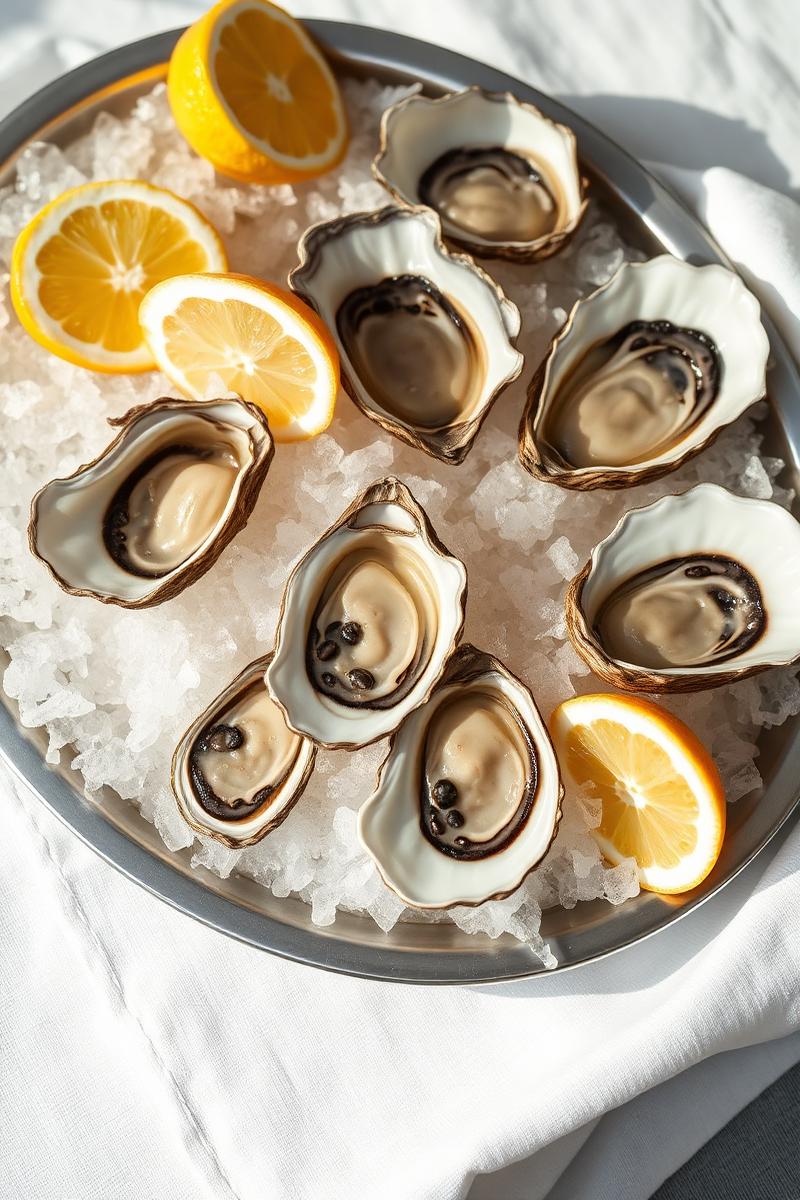
An oyster bar at a Mallorca wedding is, at its best, a single quiet moment of theatre: a small counter of crushed ice, a knife working steadily, and a guest receiving an oyster that was closed a few seconds earlier. It works because it is honest — no plating tricks, no reduction of the product, just cold, salt and the sea.
This guide is written for couples and wedding planners who are considering a wedding oyster bar in Mallorca and want a clear answer to the practical questions: when to serve it, how many oysters to plan, how it fits inside the venue and the main catering, and what actually matters when comparing suppliers. For a broader overview of how oyster catering works on the island, see the complete guide to oyster catering in Mallorca.
Why an oyster bar works at a Mallorca wedding
Mallorca weddings tend to happen outdoors, in gardens, fincas and villas that already have their own visual identity. That environment does not need another decorative layer; it needs food that respects the setting. An oyster bar sits naturally into that context: sober materials, restrained styling, and a product that reads immediately as coastal and refined.
It also solves a real problem in the cocktail hour. Guests are standing, they have a drink, they need something to do — and passing canapés only carry the moment so far. A live station gives the reception a centre of gravity: somewhere to walk towards, watch and talk about.
When to serve the oyster bar
The most reliable window is the cocktail reception after the ceremony. Guests are relaxed, the light is usually at its best, and an oyster bar competes with nothing that comes after it. A shorter alternative is the welcome moment as guests first arrive, especially at a villa or finca where the entrance itself is a scene.
It can also work as a focused culinary interlude between the ceremony and dinner, or as a first restrained course before a tasting menu. What matters is that the service has a defined start and end inside the wedding timeline, agreed with the planner and the venue, so it does not stretch into dinner service.
Service formats
There are three formats that suit weddings well. A styled fixed bar or live station is the classic choice: a defined counter with staff shucking continuously to the pace of the room. A live opening service in view of guests, where the shucking itself is part of the experience, adds a visible layer of craft. A discreet tray service among guests, opened at a nearby station and offered individually, works when the layout does not allow a fixed counter or when the couple prefers a quieter presence.
All three share the same principle: each oyster is opened close to the moment it is served. Nothing is prepared in advance and held on ice for long periods.
How many oysters per wedding guest
As planning ranges rather than fixed rules: around 2–3 oysters per guest when the oyster bar is a tasting accent alongside other substantial canapés, and around 3–6 oysters per guest when it is a prominent part of the cocktail reception. For weddings built around an oyster-forward moment, quantities go higher.
The final number always depends on duration of the service, the rest of the menu, the guest profile and the format chosen. A short cocktail hour with a strong canapé programme calls for the lower end; a long welcome with the oyster bar as the main gastronomic feature calls for the higher end.
Guests who do not eat oysters
Not every guest will want an oyster, and that is expected. The service is planned as an optional tasting: guests who prefer to skip it simply do not approach the bar, and quantities are calculated on realistic uptake rather than one per person.
Alternatives for those guests belong with the main wedding caterer — the canapés, food stations and dinner service already cover that ground. Clear communication between the oyster service and the main catering avoids duplication and keeps the flow of the cocktail hour clean.
Mallorca venue logistics
The island's venues vary — historic fincas, private villas, coastal hotels, garden estates — but the practical checklist is similar. A workable oyster bar asks for reasonable vehicle access, a protected preparation area shielded from direct sun and strong wind, refrigeration on site or an agreed cold storage plan, access to clean water for hygiene, a clear service route to guests, adequate lighting for the service window, and a discreet way to manage waste.
Outdoor settings are perfectly suitable when these details are anticipated. Shade over the counter, careful timing to avoid the hottest part of the day and enough ice to hold temperature through the service are the three points that make the difference.
Food safety and allergens
Safety at a wedding oyster bar comes from operational discipline: traceable sourcing through authorised suppliers, an unbroken cold chain, opening close to the moment of service, trained staff, and clear communication about the fact that oysters are a mollusc — a recognised allergen.
For general context on shellfish allergens, see EFSA on food allergens, and on the environmental factors affecting raw shellfish, EFSA on Vibrio bacteria in seafood. Guests who are pregnant, immunocompromised or otherwise medically vulnerable should follow the standard advice for raw shellfish and consult their doctor.
Working with the planner, venue and main caterer
An oyster bar is one moment inside a larger operation. It works best when the planner, the venue and the main caterer know exactly when it starts, where it lives, how staff will circulate, and how allergens are handled. The oyster service is not a replacement for the main catering; it is a specialist course inside it.
The Seventh Oyster coordinates directly with planners, venues and main caterers so the oyster moment lands cleanly inside the timeline agreed for the day.
Styling and presentation
The presentation should follow the wedding, not compete with it. Crushed ice, sober trays, well-cut lemon and a small number of glass containers for condiments are enough. The counter itself — natural wood, linen, stone — can be adapted to the aesthetic of the wedding without turning the bar into a set piece.
The general rule: the oyster should be the visible protagonist, and everything around it should feel deliberately quiet.
Pairings
Champagne and traditional-method sparkling wines are the classic pairing, and for good reason: acidity, fine bubble and low sweetness all support the oyster. Mineral white wines — a dry Albariño, a saline Chablis, an Assyrtiko — work equally well when the wedding wine list points that way.
Restrained condiments are part of the pairing: fresh lemon, a mignonette, and occasionally a house sauce. Caviar can be added as an optional enhancement, either as a discreet garnish on selected oysters or as a small parallel tasting. No single pairing is objectively best; the right choice follows the wedding's wine list and the couple's taste.
Pricing factors
A wedding oyster bar is quoted by the event rather than by a fixed rate. The main drivers are guest count, the oyster variety and total quantity, service duration, number of staff, venue location and access, styling and presentation, whether caviar or specific pairings are added, and the equipment and refrigeration required on site.
A tailored proposal built around the specific wedding is more accurate — and usually more useful — than a headline price.
Booking timeline
It is worth enquiring as soon as the date and venue are confirmed. Spring and summer weddings in Mallorca fill the calendar of suppliers and venues quickly, and earlier planning gives more room for coordination and product selection. There is no fixed deadline — but earlier is almost always easier.
Practical checklist
Before finalising the oyster bar, confirm the moment in the timeline with the planner, the counter location with the venue, the coordination points with the main caterer, the refrigeration and access plan, the shade and weather contingencies for outdoor settings, the number of staff and the service duration, the number of oyster varieties, whether caviar is added, and the allergen communication for guests.
None of this is complicated on its own. Getting all of it on paper before the day is what keeps the service calm.
Frequently asked questions
- How many oysters per wedding guest?
- As planning ranges: around 2–3 oysters per guest for a tasting accent alongside other canapés, and around 3–6 oysters per guest when the oyster bar is a prominent part of the cocktail reception. The final number depends on duration, menu and format.
- Can an oyster bar work at an outdoor finca or villa?
- Yes. Outdoor fincas and villas in Mallorca are one of the most natural settings for a wedding oyster bar, provided there is reasonable access, shade over the counter, an agreed refrigeration plan and enough ice to hold temperature through the service.
- What happens if some guests do not eat oysters?
- The oyster bar is planned as an optional tasting, not a course served to every guest. Alternatives are covered by the main wedding caterer, and quantities are calculated on realistic uptake rather than one oyster per person.
- Can the service include caviar?
- Yes. Caviar can be added as a discreet garnish on selected oysters, as a small parallel tasting, or as a separate reception moment, depending on the wedding.
- How far ahead should the oyster bar be booked?
- As soon as the date and venue are confirmed, particularly for spring and summer weddings. Earlier planning gives more room for coordination, logistics and product selection. There is no fixed deadline.
- Does the oyster bar replace the main wedding catering?
- No. It is a specialist course that works inside the wider catering plan, coordinated directly with the planner, the venue and the main caterer.
Planning an oyster experience in Mallorca
The Seventh Oyster creates tailored oyster and caviar experiences for weddings, private villas and celebrations, coordinating directly with planners, venues and main caterers. Share the date, the location, an approximate guest count and the concept — we will build a proposal shaped around it.