Luxury Seafood Catering in Mallorca: Oysters, Caviar and Live Service
How to design a premium seafood moment in Mallorca: formats, sequencing, timing, guest flow and coordination for a specialist oyster and caviar service that complements your main caterer.
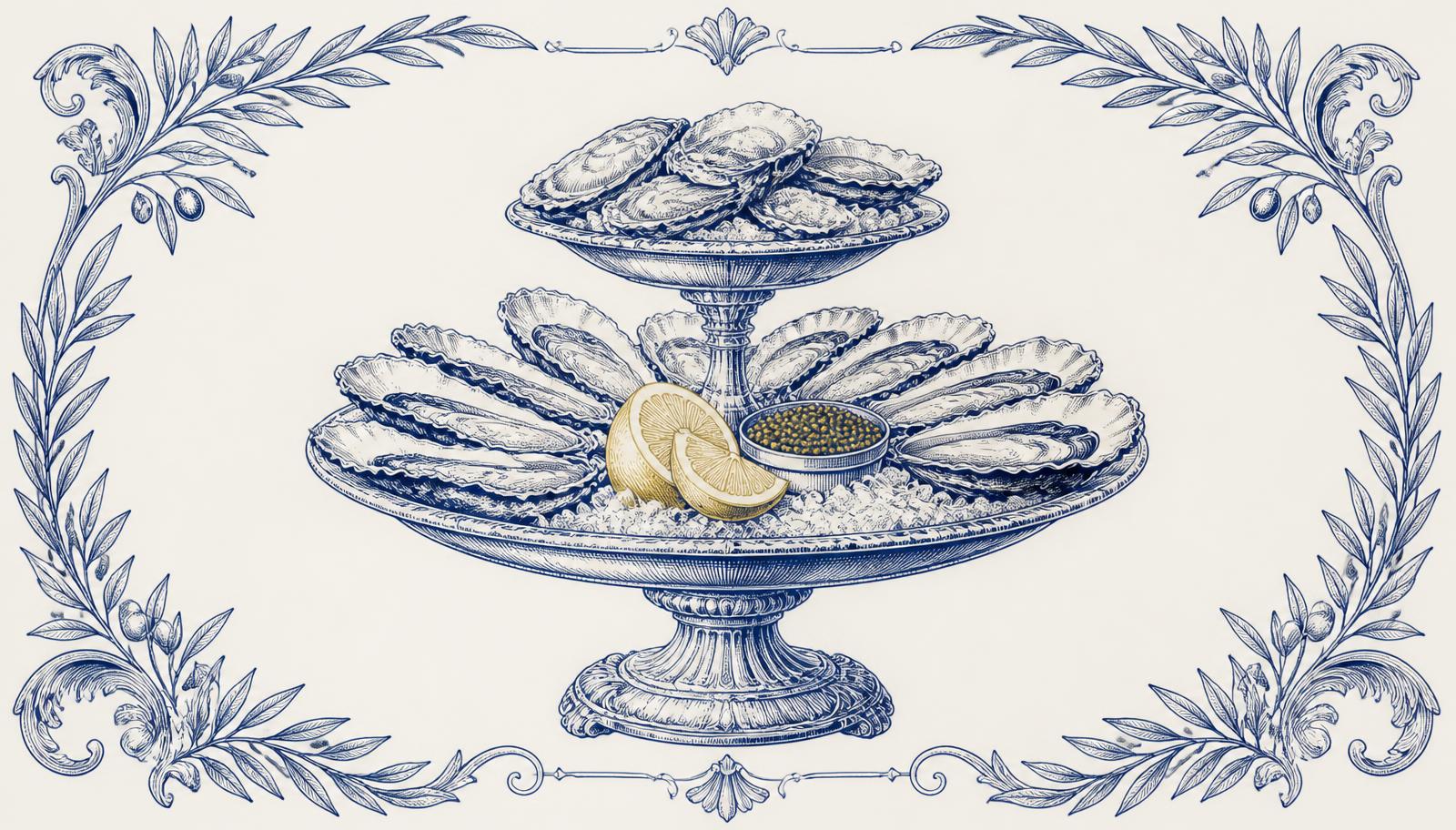
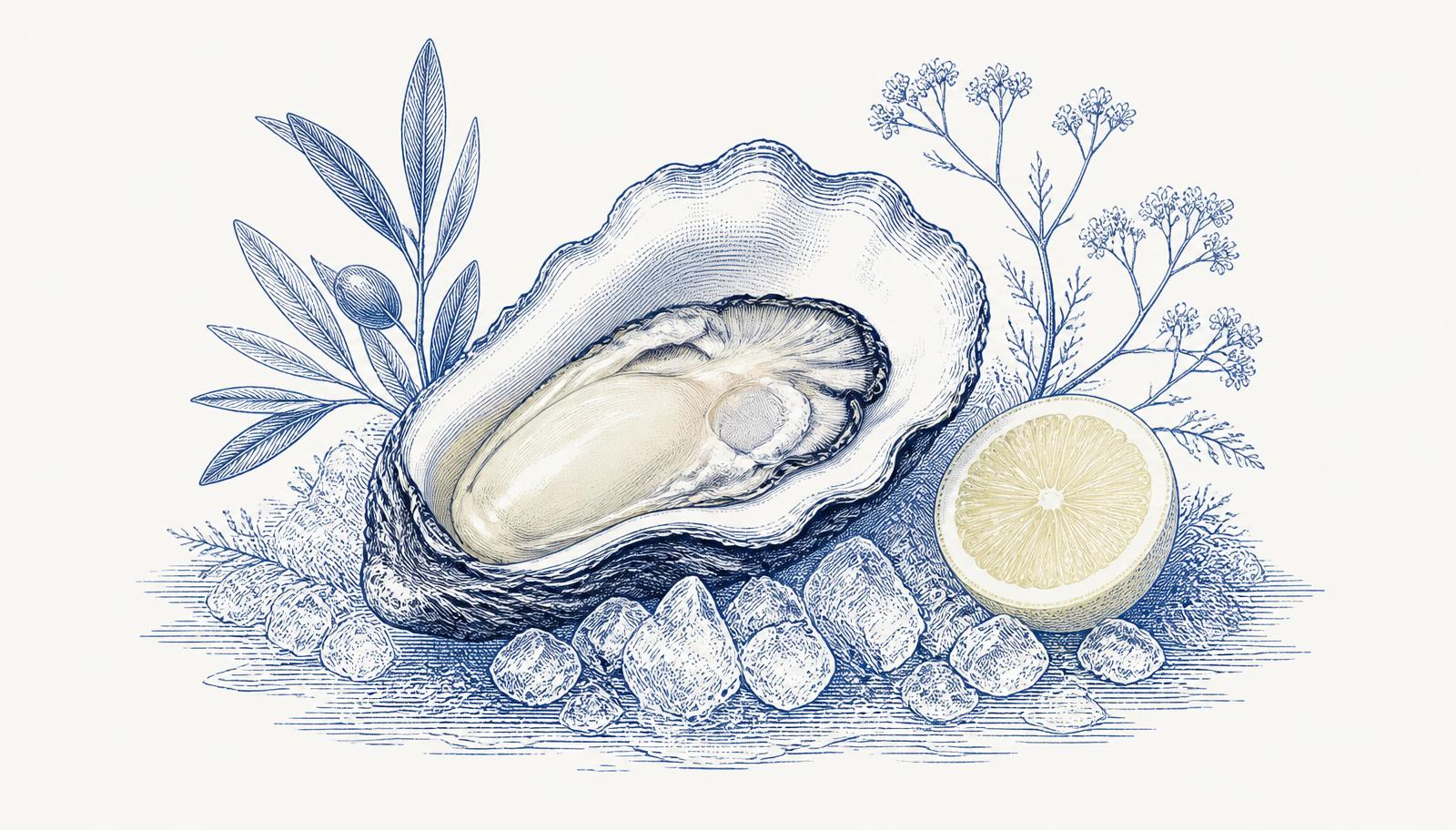
Luxury seafood catering in Mallorca is usually understood as a single, carefully placed moment rather than a full menu. In practice, the most memorable version of it is narrow and deep: fresh oysters and fine caviar, prepared and served live, inside a service window agreed with your planner and your main caterer. The Seventh Oyster is a specialist in exactly that — an oyster and caviar experience — and not a general seafood caterer.
That distinction matters when you are planning. A general caterer builds the meal: canapés, courses, staffing, plating, timings across the whole evening. A specialist adds one elevated chapter to it. This guide explains how to design that chapter well in a Mallorca setting: which formats work, when to serve, how guests move around the station, what quality criteria are worth asking about, and how coordination is handled so nothing collides on the timeline.
If you want the broader background on how the service works, our complete guide to oyster catering in Mallorca covers the fundamentals; this article is about composing oysters and caviar together as one premium seafood moment.
What a specialist seafood moment is — and what it is not
It is a focused, live service centred on two products: oysters opened to order and caviar served with restraint. It typically runs for a defined window — an arrival hour, a cocktail reception, a sunset stretch before dinner — with dedicated staff, its own station or circulating trays, and its own cold chain.
It is not a seafood buffet, not a paella service, not a full shellfish platter programme, and not a replacement for your main caterer. Guests should read it as a signature detail, not as the meal. That is precisely why it works: a short, generous, high-quality sequence is more persuasive than a long table of many things.
Why oysters and caviar belong together
The two products complement rather than compete. An oyster is saline, cold and alive with the sea; caviar is buttery, textural and quiet. Served in sequence, the palate moves from brightness to depth without any need for a chef's explanation.
There is also a practical logic. Both require refrigeration, both are served cold, both benefit from minimal handling and both are best presented with almost nothing added. One team, one cold chain, one station discipline, one moment — instead of two suppliers occupying the same corner of the terrace.
For product-specific detail, see our caviar catering guide for Mallorca and the service pages for oyster catering in Mallorca and caviar catering in Mallorca.
Formats for a live seafood station in Mallorca
A fixed station is the most common format: a discreet counter with crushed ice, one or two shuckers working continuously and caviar served alongside. It gives the moment a visible centre and lets guests choose when to approach.
Circulating service replaces the counter with trays carried through the space. It suits gardens, terraces with several levels and events where the host prefers guests to stay in conversation rather than form a line. Opening still happens live, just out of the main flow.
A guided tasting is a more intimate option for smaller groups: two oyster varieties compared side by side, then a caviar service with a short explanation of texture and finish. It works well at pre-wedding dinners and villa gatherings.
A hybrid — station for the first half of the window, trays for the second — is often the most practical answer at larger events, because it absorbs the arrival peak and then keeps the service moving as guests spread out.
Sequencing: where the moment sits in the evening
The strongest position is early. A raw, cold, saline course belongs before the palate has been through a full menu, which is why the welcome drink and the cocktail reception are the natural windows.
At weddings, the gap between ceremony and dinner is the most reliable slot: guests are standing, drinks are in hand and the service adds something to do without delaying anyone. At villa events, the hour before sunset tends to be the right one, both for light and for temperature. On yachts, the moment usually follows anchoring rather than transit.
A single, well-run window of roughly one to two hours is generally more effective than a service stretched across the evening. It concentrates the impression and it protects the product.
Guest flow and the space around the station
A live station creates gravity: people gather around it. Placed badly it blocks a doorway or competes with the bar; placed well it pulls guests towards a view, opens up the terrace and quietly solves the awkward first half hour of a reception.
The practical criteria are consistent: shade during daylight hours, room to approach from more than one side, distance from the main bar and the entrance to the dining area, a discreet route for restocking, somewhere out of sight for shell waste and lighting if the service continues into the evening.
The team should also be sized to the room. Too few hands and a queue forms; too many and the service loses its calm. That balance is derived from the guest count and the length of the agreed window, not applied as a formula.
Event types across the island
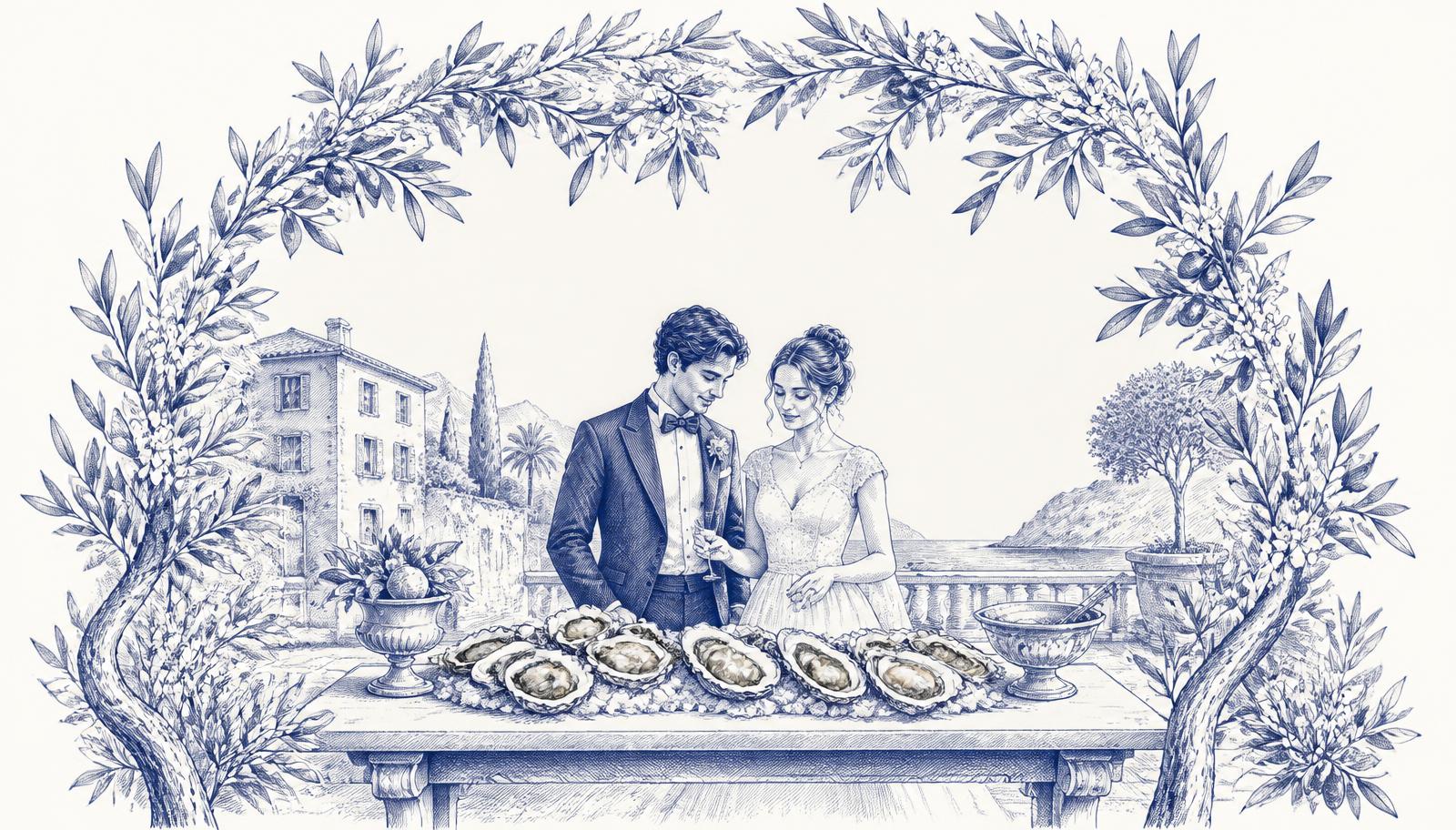
Weddings are the most frequent context, where the service acts as the signature of the cocktail hour — see our oyster bar for weddings in Mallorca article and the wedding oyster and caviar catering page.
Private villas and fincas are the second, where the setting is intimate and the service reads as hospitality rather than catering; the operational side of those events is covered in our private villa guide and on the villa event catering page.
Yachts and port-side receptions are possible but always assessed individually: usable deck space, a safe working surface, access at the berth, waste handling and weather all decide the format. Corporate dinners, brand launches and hosted experiences use the same structure, usually with a tighter window and a more guided tasting.
Quality criteria worth asking about
Ask where the product comes from and whether the supply chain is traceable and authorised. Ask how the cold chain is maintained from collection to service, and how it is protected during a summer event outdoors. Ask whether every oyster is inspected individually as it is opened, and what happens to any that are not right.
Ask how allergen information is communicated to guests, how the station is cleaned and how waste is removed. Ask how many staff will be present, for how long, and who they report to on the day. A proposal that answers these without prompting is usually the one that will run smoothly.
Availability of specific varieties, sizes and caviar types varies through the season and is confirmed close to the event rather than promised in advance.
Food safety and raw shellfish, handled properly
Raw shellfish deserves rigour rather than reassurance. The essentials are a controlled cold chain, product from authorised suppliers, individual checks at the point of opening, ice replenished throughout, shaded positioning in summer and a service window planned around the heat of the day.
Molluscs are a declarable allergen, and standard advice is that guests who are pregnant, immunocompromised or otherwise medically vulnerable should avoid raw shellfish and follow their doctor's guidance. That information is made available discreetly at the station and shared with the planner beforehand. For context, see EFSA — food allergens and EFSA on Vibrio bacteria in seafood.
No one can offer absolute guarantees with a natural product. What can be offered is disciplined handling, and the willingness to withdraw anything that does not meet the standard.
Coordinating with your main caterer and planner
The specialist service is designed to fit inside an existing plan, not to reorganise it. In practice that means agreeing the service window with the planner, confirming the position and power or refrigeration needs with the venue, aligning the canapé programme with the main caterer so the two do not overlap, and setting arrival, setup and strike times that stay out of the way of the kitchen.
Where a wedding planner is involved, they usually hold the timeline and everything is confirmed through them. Where there is no planner, the same points are agreed directly with the host or the venue manager. Either way, the aim is a service that appears effortless because the coordination happened weeks earlier.
Planning checklist
Before requesting a proposal, it helps to have: the date and venue, the approximate guest count, the type of event, the preferred service window, whether a planner or main caterer is already appointed, whether the space is a terrace, garden, beach club or yacht, and any known dietary or allergen considerations.
Final formats, quantities and staffing always depend on venue access, guest count, the event schedule, the products chosen and availability at the time. Those variables are what a serious proposal is built from.
A quiet, memorable moment
Luxury seafood catering in Mallorca does not need scale to be impressive. It needs good product, cold hands, a well-chosen hour and a team that knows when to step back. Oysters and caviar, served live, do the rest.
If you are planning a wedding, villa gathering, yacht reception or private event on the island, tell us about your event and we will prepare a proposal shaped around your venue, your timeline and your guests.
Frequently asked questions
- Is The Seventh Oyster a general seafood caterer?
- No. We are a specialist in oysters and caviar served live. We are designed to complement your main caterer with one elevated seafood moment, not to provide the full menu.
- Can the service work alongside a caterer already booked?
- Yes — that is the usual arrangement. We agree the service window, position and setup times with the planner and the main caterer so the two programmes complement rather than overlap.
- When is the best moment to serve oysters and caviar?
- Early in the event, while the palate is fresh: the welcome drink, the cocktail reception or the gap between ceremony and dinner. A concentrated window of one to two hours usually works better than a service spread across the evening.
- What does the venue need to provide?
- In practice: a shaded position with room for the station, refrigeration or cold storage agreed in advance, an ice supply, access to water and hand hygiene, a workable delivery route, lighting if the service runs into the evening and a place for shell waste.
- Does it work at a villa, on a terrace or on a yacht?
- All three are possible. Villas and terraces are the most straightforward. Yachts are assessed individually — deck space, a safe working surface, berth access, waste handling and weather determine the format.
- How many oysters should be planned per guest?
- It depends on the guest count, the length of the service and the rest of the menu. A station carrying the whole arrival hour needs different planning from one running alongside a full canapé programme, so quantities are derived from your specific schedule.
- How is food safety handled for raw shellfish?
- Through a controlled cold chain, product from authorised suppliers, individual inspection of each oyster as it is opened, ice replenished throughout and a service window planned around the heat. Guests who are pregnant, immunocompromised or medically vulnerable should follow standard advice for raw shellfish.
- Can specific oyster varieties or caviar types be requested?
- Preferences can be discussed, and we will propose what suits the format and the audience. Availability varies through the season and is confirmed close to the date rather than promised in advance.
Planning an oyster experience in Mallorca
The Seventh Oyster creates tailored oyster and caviar experiences for weddings, private villas and celebrations, coordinating directly with planners, venues and main caterers. Share the date, the location, an approximate guest count and the concept — we will build a proposal shaped around it.