Oyster Bar or Traditional Canapés: Which Is Better for Your Mallorca Event?
A balanced decision guide for planners and hosts: how a live oyster bar and a traditional canapé service differ in experience, timing, dietary coverage and logistics — and when combining both is the better answer.
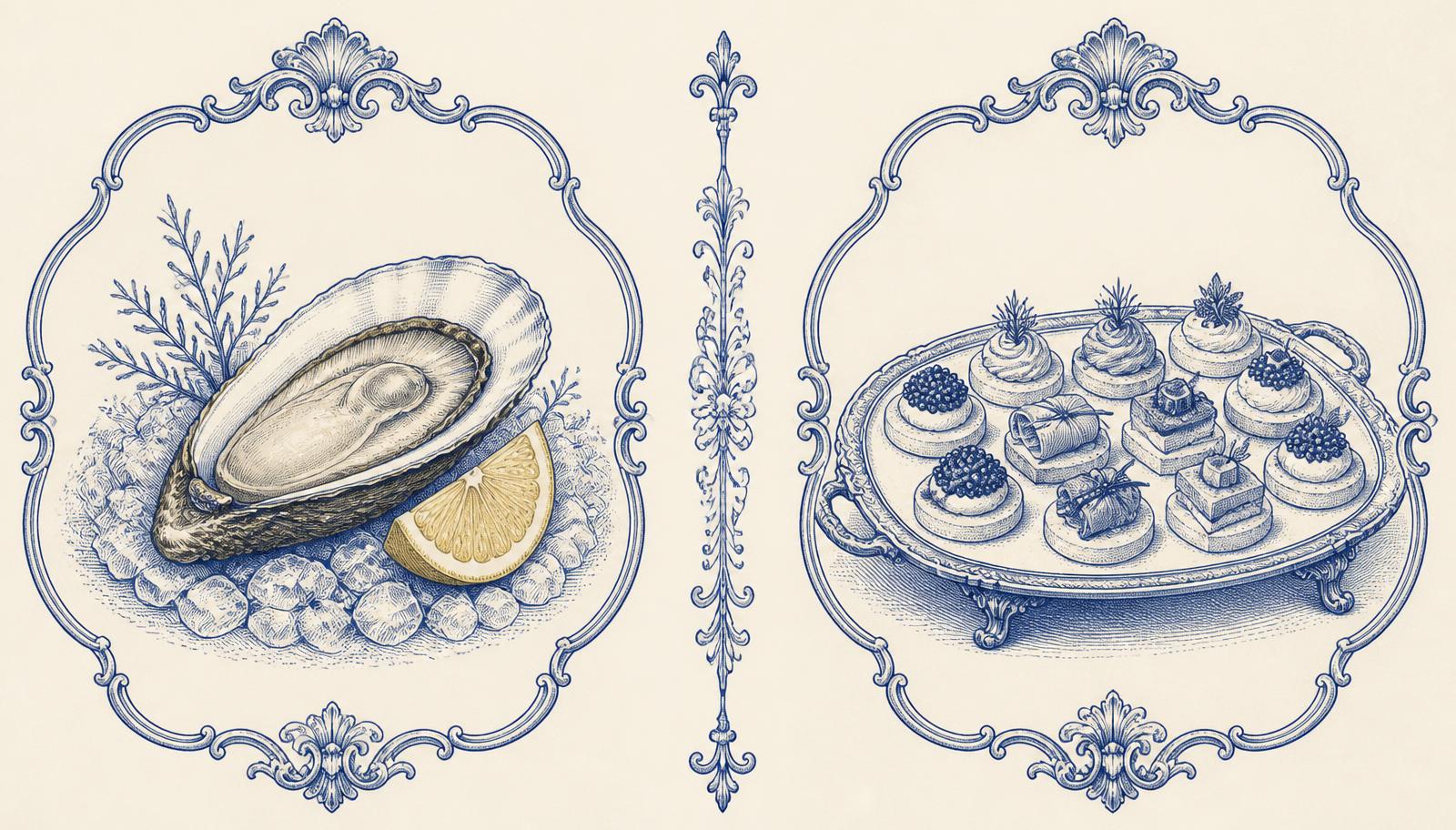
Neither format is universally better. An oyster bar is the stronger choice when you want a live, specialist focal point that gathers guests and gives the reception a clear centre of gravity. Traditional canapés are stronger when you need menu breadth, wide dietary coverage and continuous circulation across a large or dispersed space. For a great many Mallorca weddings and private events, the most satisfying answer is not one or the other but a planned combination: a defined oyster moment inside a broader canapé service delivered by the main caterer.
This guide sets out the practical differences so you can decide with your planner and your caterer rather than by instinct. THE SEVENTH OYSTER is a specialist oyster and caviar experience. We do not provide traditional canapé catering; we work alongside the main caterer so that the live seafood moment fits the wider menu and timeline. If you want the wider context first, our complete guide to oyster catering in Mallorca covers the fundamentals.
What each format actually is
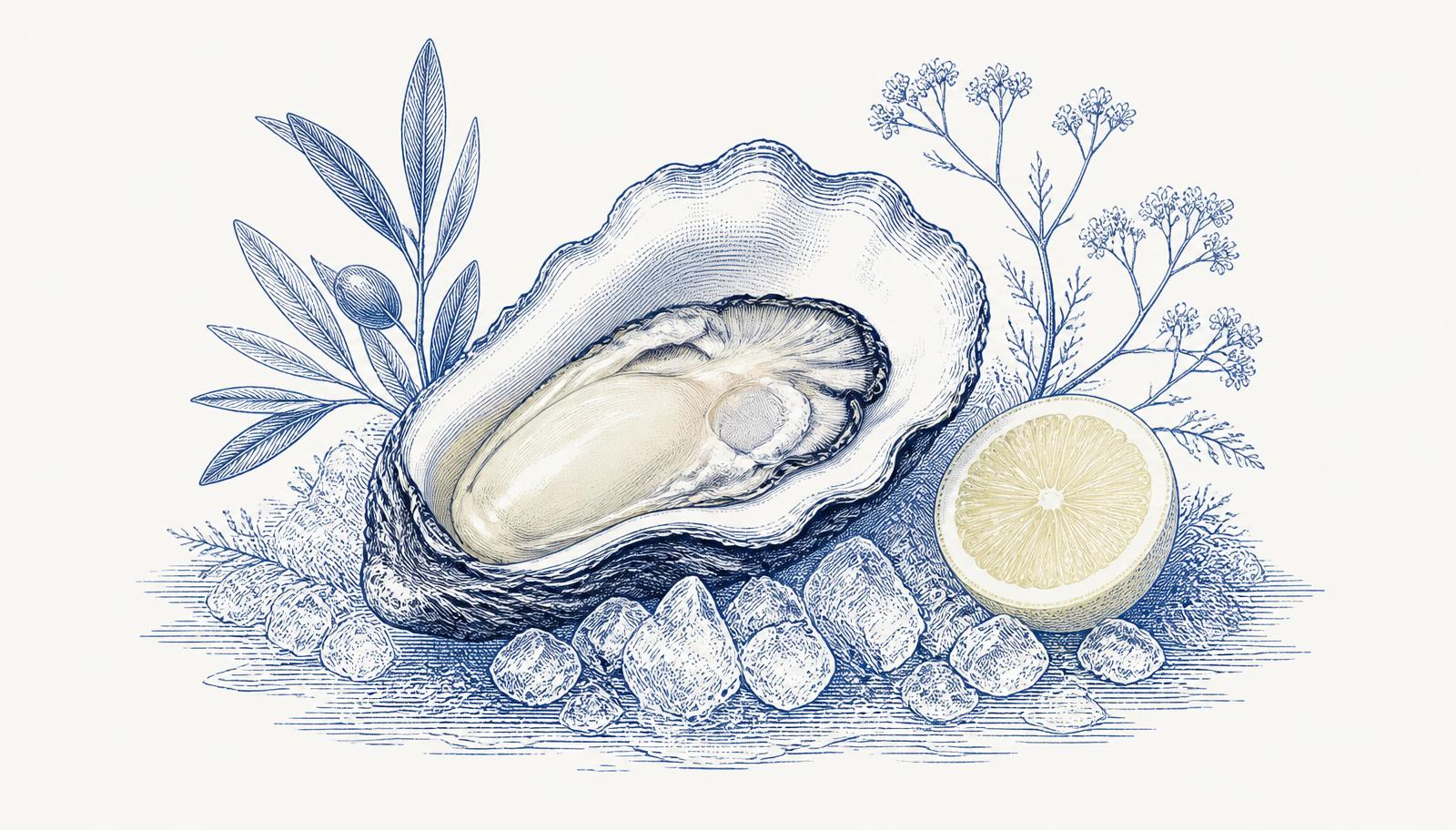
A live oyster bar is a staffed service point. Oysters are held on ice and opened to order in front of guests, dressed simply — lemon, a mignonette, perhaps a chilled accompaniment — and handed over immediately. It is prepared in view, served at its freshest, and built around one product family rather than a broad menu. Some versions serve on trays from a central preparation point instead of holding guests at a fixed bar.
Traditional canapé service is the familiar reception format: a range of small bites, hot and cold, prepared back-of-house and carried through the room by waiting staff, sometimes supported by grazing tables. Its defining features are variety, portability and coverage. A well-built canapé menu can address vegetarian, vegan, gluten-free and children's requirements simultaneously, and it can be served anywhere staff can walk.
One format concentrates attention; the other distributes it.
Guest experience and interaction
An oyster bar produces conversation. Guests queue lightly, watch the knife work, ask where the oysters come from and stay in one area — exactly what many hosts want in the first hour, when people are arriving and do not yet know each other. It is a soft social anchor that needs no speech or seating plan to work. Our article on how to choose an oyster catering service explains what separates competent shucking from theatre.
Canapés produce movement. Trays reach guests wherever they are standing, which suits a garden with several terraces, a villa with indoor and outdoor zones, or any reception where you want people to mingle rather than gather. Nobody has to walk anywhere or wait, and shy guests are never obliged to approach a station.
Neither effect is better in the abstract: ask what you want the room to do in that half hour, cluster or circulate.
Variety, allergens and dietary inclusion
This is where a canapé menu has a structural advantage. Breadth is the point of the format, so a good caterer can plan parallel options and label them clearly, covering most of the requirements a guest list throws up without anyone feeling singled out.
An oyster bar is by definition narrow. Oysters are molluscs and molluscs are a declared allergen, so the format does not suit everyone and should never be planned as if it did. Suitable alternatives are the main caterer's responsibility and should be agreed in advance rather than improvised on the day, while the service point tells guests plainly what is being served. Guests who are pregnant, immunocompromised or simply unsure about raw shellfish should be directed towards those alternatives and towards relevant professional or public-health guidance. We describe what is being served and how it has been handled; we do not offer absolute assurances about raw shellfish, and no responsible supplier should.
In practice this is an argument for pairing rather than for choosing. The oyster bar carries the moment; the canapé menu carries the coverage.
Timing, rhythm and guest flow
Canapés are continuous. They can start the moment the first guest arrives and taper gradually as the reception moves towards dinner, absorbing delays without anyone noticing.
An oyster bar works best as a defined window rather than an open-ended service. A concentrated period — typically framed around welcome drinks or the cocktail hour — keeps the ice, the queue and the pace under control and leaves the moment memorable rather than diluted. Opening a station for an indeterminate stretch tends to produce a flat middle section and an awkward end.
Sequencing also matters. If speeches, a ceremony or a photography window sit inside the reception, the oyster service should be positioned either side of it, not underneath it. A planner who knows the running order will usually see the right slot immediately.
Space, cold chain and outdoor logistics in Mallorca
Summer conditions on the island are the real constraint. A live oyster station needs a stable, level surface, shade or a covered position, uninterrupted ice, a clear route for deliveries, and an agreed place for shells and waste away from guests and the kitchen line. Cold chain is planned end to end, and the service window is set with the conditions of the day in mind.
Canapés are more forgiving spatially — they need staff and a plating area, not a guest-facing footprint — but hot items lose their moment quickly outdoors, and long tray journeys across a large finca have their own cost.
Venue type changes the answer. Our guides to oyster catering in private villas and oyster service at yacht events cover those operating conditions in detail.
By event type
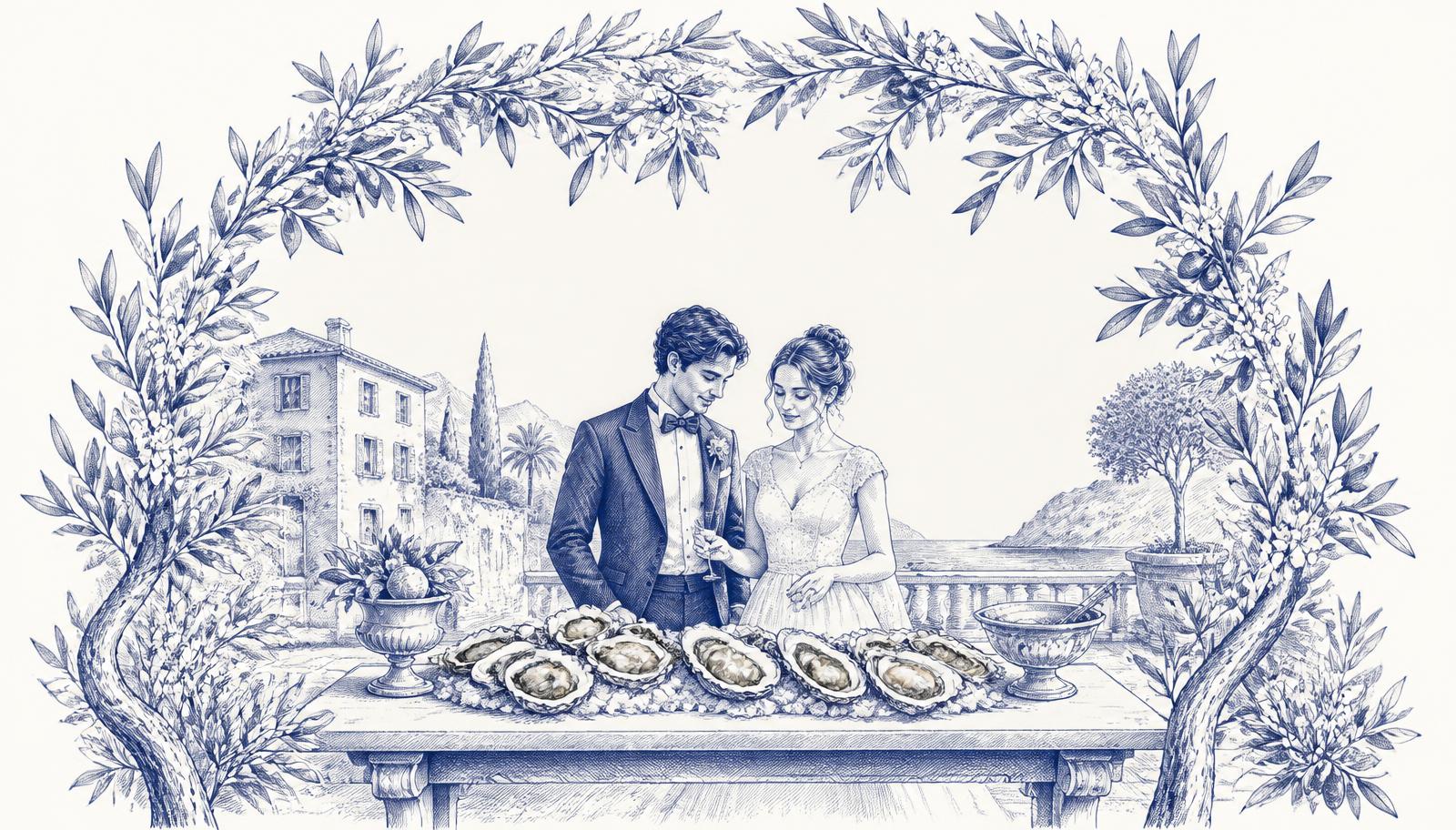
Destination weddings usually benefit from both. The canapé menu handles a diverse international guest list and a long reception; the oyster bar gives the arrival a defined highlight that guests photograph and remember. Our guide to an oyster bar for weddings in Mallorca goes further into the wedding-specific detail.
Villa events are where a station tends to shine, because the space is intimate enough for one focal point to define the evening and the layout is usually fixed. Yacht celebrations lean the other way: limited surfaces, movement and storage often favour a short, tightly controlled service, sometimes on trays rather than at a fixed bar, agreed with the crew.
Smaller private gatherings — a dinner before a larger celebration, a milestone birthday for twenty — are often the clearest case for an oyster bar alone, because there is no need for the breadth that a canapé programme provides.
When to choose an oyster bar
Choose the oyster bar as your lead format when the guest count is manageable, the space has one natural gathering point, and you want the reception to have a subject. It suits hosts who would rather do one thing precisely than many things adequately, and events where the main meal already provides all the variety the evening needs.
It also suits situations where the main caterer's strength lies in the seated menu rather than in reception food. A specialist station can lift the first hour without asking the kitchen to stretch.
When traditional canapés should lead
Let canapés lead when the guest list is large or unusually varied, when the reception is spread across several zones, when there are children present in numbers, or when a long gap between ceremony and dinner needs to be filled steadily rather than punctuated.
They should also lead whenever the host's priority is that nobody waits or walks. That is a legitimate brief, and a live station is simply not the tool for it.
The hybrid: a defined oyster moment inside a canapé service
The combination most Mallorca planners end up with looks like this. Canapés begin as guests arrive and continue throughout. The oyster bar opens as a defined window inside that period — often once the majority of guests are present — and closes cleanly before the transition to dinner. Guests who want the experience get it; guests who do not are never left without something to eat.
Coordination points to settle in advance: who owns the timeline and the cue to open and close; where the station sits relative to the bar and the photographer's sightlines; power, ice and water access; the waste route; how allergen information is communicated at the point of service; and who briefs the waiting staff so trays do not compete with the station in the same corner.
Settled properly, none of this is visible to guests — which is the point. If you would like this mapped onto your own running order, our oyster catering service page outlines how we work alongside a main caterer.
A short decision checklist
What do you want the first hour to do — gather people, or keep them moving? How many guests, and how many distinct zones? Is there shade and a stable surface for a station? Does the guest list include significant dietary requirements that a narrow format cannot serve? Is there a fixed running order the service must sit around? Who is the main caterer, and what is their reception offering already? And finally: do you want one memorable moment, or consistent coverage across the whole reception?
If the answers point in both directions, that is not indecision. It is the hybrid.
Planning your event
THE SEVENTH OYSTER designs oyster and caviar experiences for weddings, villas, yachts and private celebrations in Mallorca, coordinating directly with planners, venues and main caterers. We do not replace the canapé menu — we give the reception a live, specialist moment inside it.
Share the date, the venue, an approximate guest count and the shape of the reception, and we will propose a format and a service window built around it. You can request a tailored proposal here.
Frequently asked questions
- Is an oyster bar a replacement for canapés?
- Usually not. An oyster bar is a focused live moment built around one product; canapés provide breadth and continuous coverage. For small gatherings a station can stand alone, but at most weddings it works best alongside a canapé menu from the main caterer.
- Can both be served at the same event?
- Yes, and it is the most common arrangement. Canapés run throughout the reception while the oyster bar opens as a defined window inside it, with the timings agreed between the planner, the main caterer and us.
- When is the best moment to serve oysters?
- Typically during welcome drinks or the cocktail hour, once most guests have arrived and before the transition to dinner. The window is set around the running order so it does not compete with speeches, the ceremony or photography.
- What about guests who cannot eat oysters?
- Oysters are a mollusc allergen and the format does not suit everyone. Suitable alternatives are agreed in advance and supplied by the main caterer, and the service point tells guests clearly what is being served. Guests who are pregnant, immunocompromised or unsure about raw shellfish should be directed to the main caterer's alternatives and to relevant professional or public-health guidance.
- Does an oyster bar work outdoors in a Mallorca summer?
- It can, with planning: shade or a covered position, a stable surface, uninterrupted ice, and a service window matched to the conditions of the day. We agree those points with the venue before confirming the format.
- How many guests does an oyster bar suit?
- It scales, but the format changes with the numbers: a single station suits a contained group, while larger receptions need either a longer window, additional service capacity or tray service to avoid queues. We propose the arrangement once the guest count and timeline are known.
- How much space does a live station need?
- A level, shaded position with room for the bar, ice, the shucker and a small guest area in front, plus a discreet route for deliveries and waste. Where space is tight, tray service from a back-of-house point is often the better answer.
- How do you coordinate with the main caterer and planner?
- Directly. We agree the service window, the position of the station, ice and water access, the waste route, allergen communication and the cues to open and close, so the oyster moment sits inside the wider service rather than across it.
- Is an oyster bar suitable for villas and yachts?
- Villas usually suit a fixed station well. Yachts often favour a shorter, tightly controlled service — sometimes on trays rather than at a bar — agreed with the crew, because of movement, surfaces and storage.
- What information do you need to prepare a proposal?
- The date, the venue or area, an approximate guest count, the reception timeline, whether a main caterer is already appointed, and the role you would like the oyster moment to play. That is enough for us to propose a format and a service window.
Planning an oyster experience in Mallorca
The Seventh Oyster creates tailored oyster and caviar experiences for weddings, private villas and celebrations, coordinating directly with planners, venues and main caterers. Share the date, the location, an approximate guest count and the concept — we will build a proposal shaped around it.